
Last updated October 16, 2026
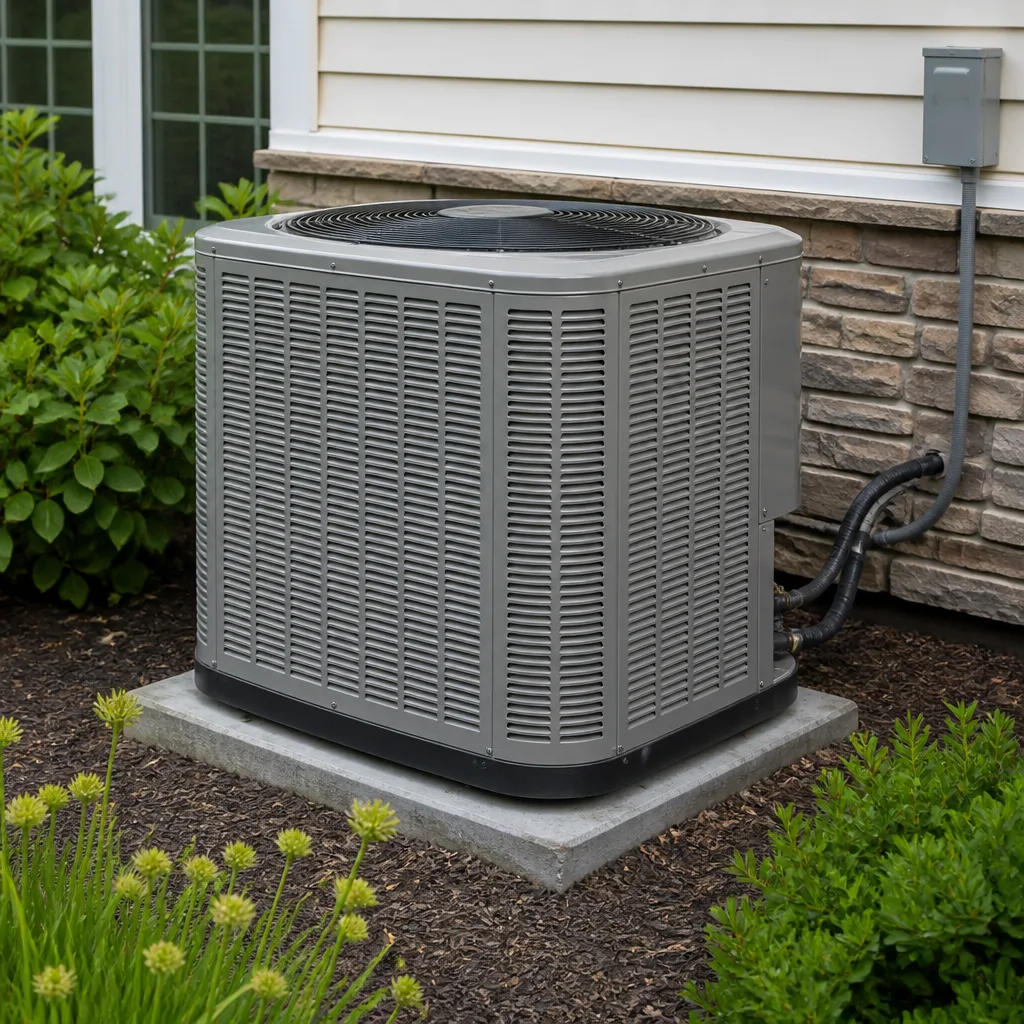 AC repair
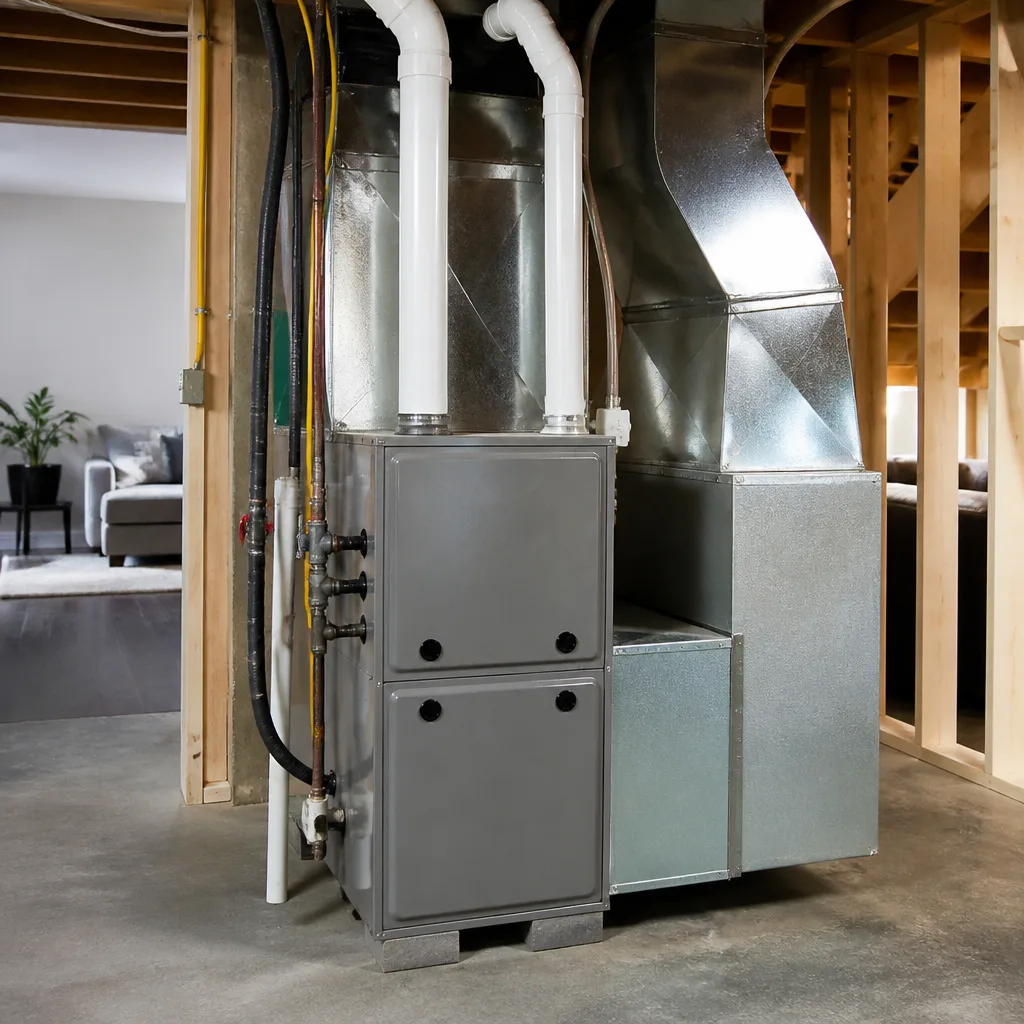 Furnace & heating
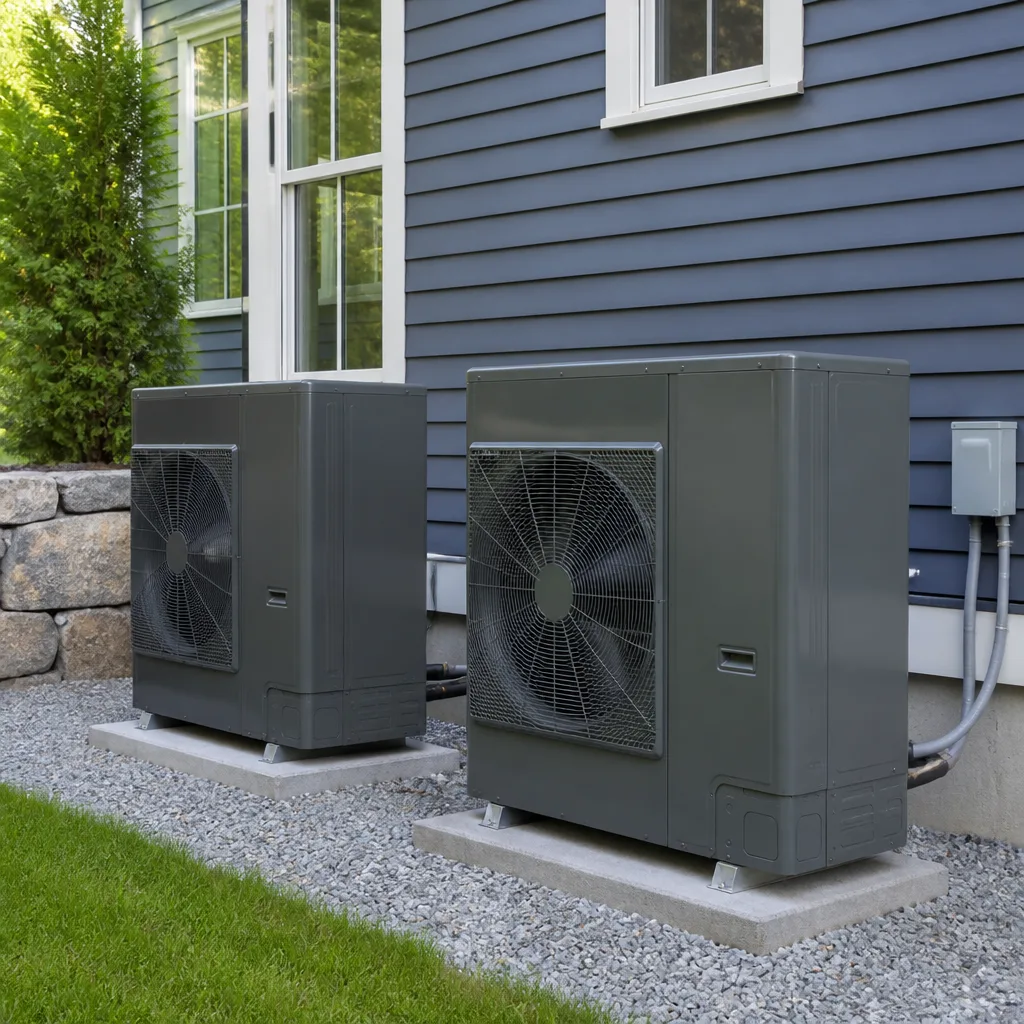 Heat pumps
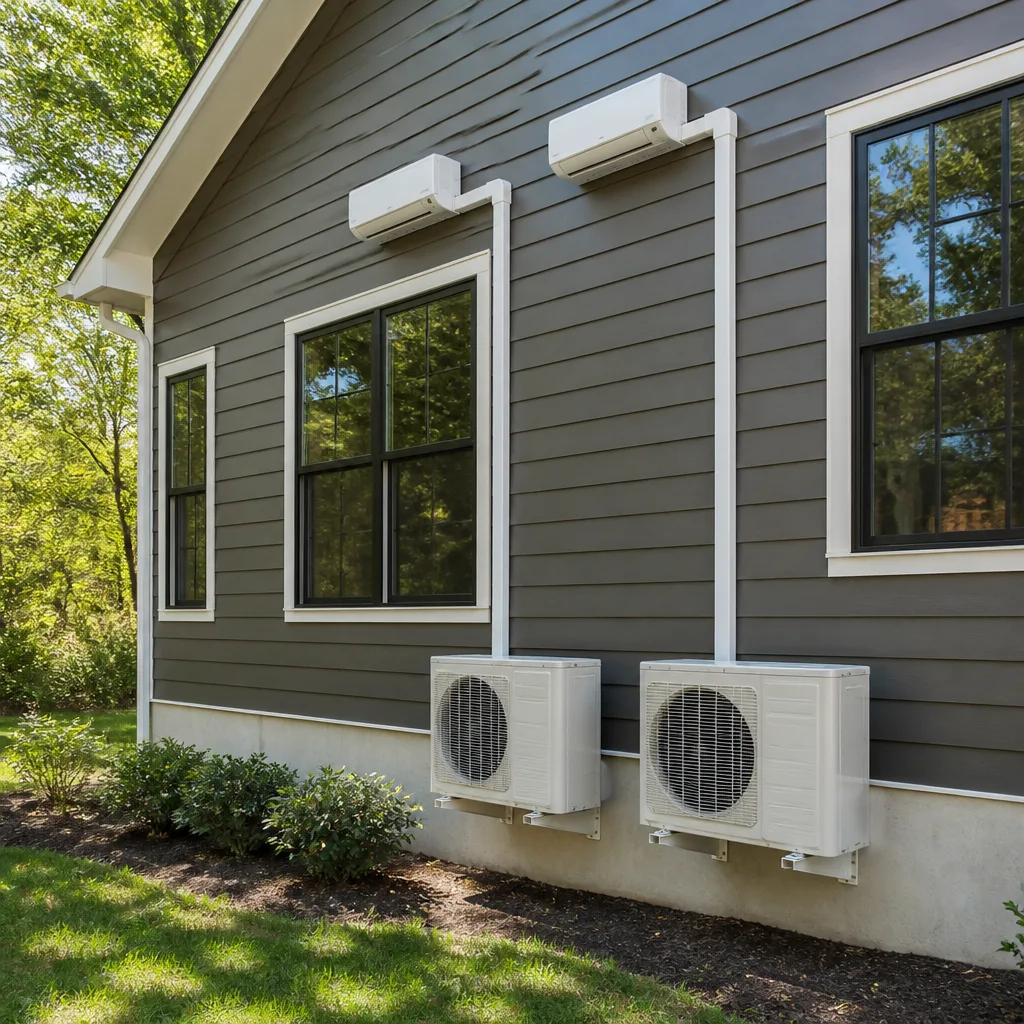 Ductless mini splits
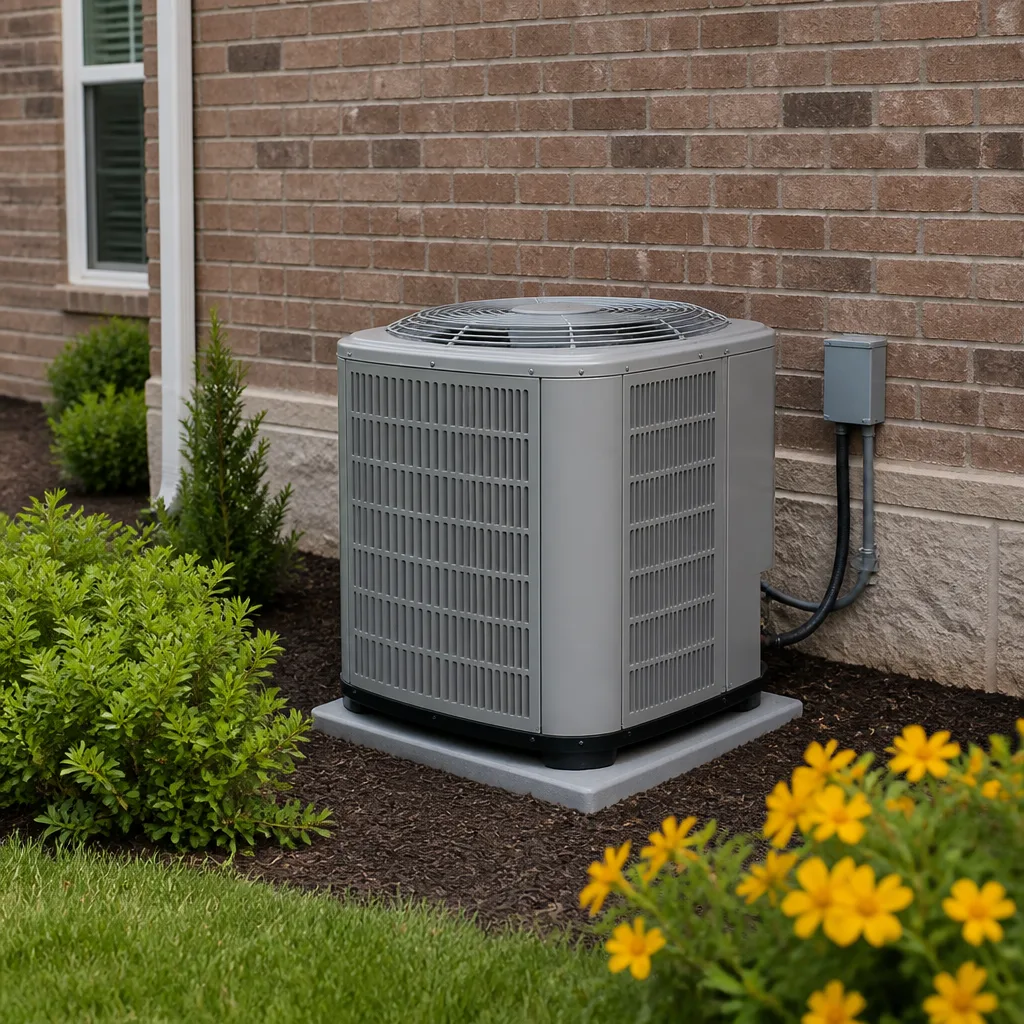 Carrier
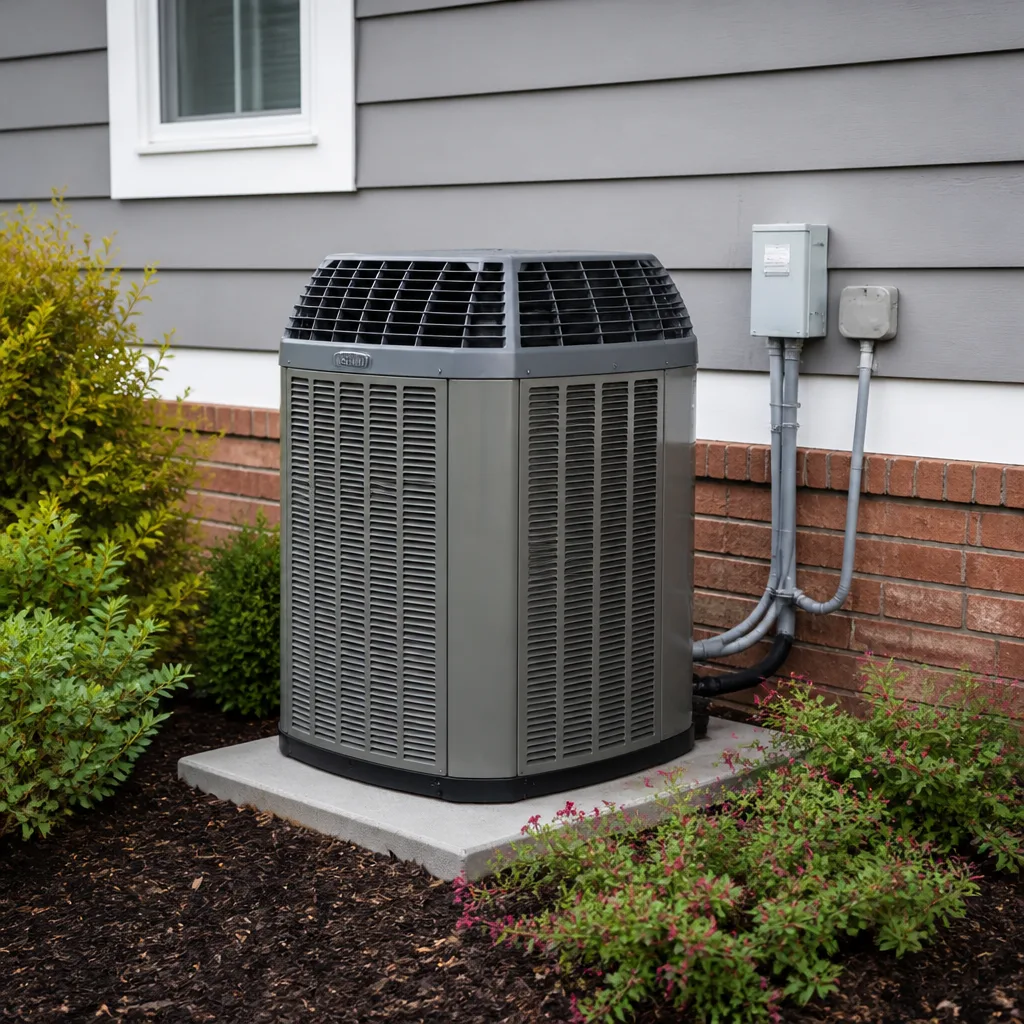 Trane
Trane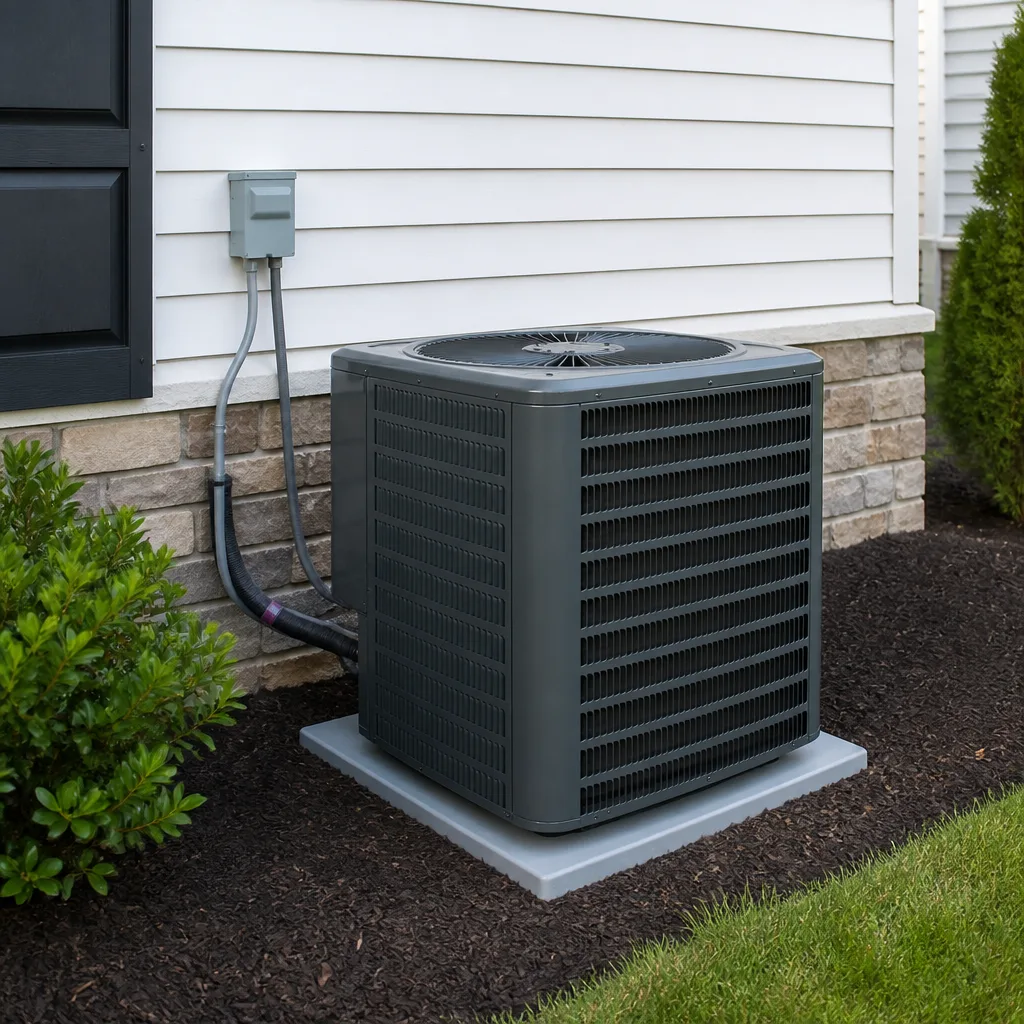 Goodman
Seasonal tune-up and full diagnostic on your Carrier, Trane, or Goodman system - readings shown to you before any repair is proposed
Diagnosis first, numbers second - you approve the repair price before a single part goes in.
Get your free estimateAC Repair Maintenance Checklist for Sacramento Homeowners
Here’s a number that matters more than most Sacramento homeowners realize: a condenser coil caked with just one-tenth of an inch of dirt can force your AC to work 21% harder to move heat out of your home. In a city where July afternoons routinely sit above 100°F, that’s not an efficiency footnote. It’s the difference between your system holding 75°F and limping to 82°F by 4 p.m., or tripping its high-pressure safety switch entirely on the exact afternoon you need it most. This guide, along with The Complete Guide to HVAC in Sacramento, is built around the four operational seasons Sacramento actually has: wildfire smoke window, pre-heat-wave prep, peak-load summer, and tule fog shoulder. Each section ties a maintenance task to the specific stress your equipment is about to face, so you’re not doing chores from a generic national checklist. You’re doing the five or six things that genuinely prevent a June breakdown in this climate, on this equipment, in your house.
Quick Answer
The shortest version: Sacramento homeowners should swap or wash their air filter monthly during wildfire smoke season and every 60-90 days otherwise, clear a 2-foot zone around the outdoor condenser each spring, schedule a professional pre-summer inspection before the first 100°F stretch, and verify the furnace heat exchanger in the fall before tule fog settles in. DIY maintenance handles the filter, the clearance, and the thermostat batteries. For a deeper look at where to draw the line, see our DIY vs Professional HVAC: The Sacramento Homeowner’s Decision Guide. Everything involving refrigerant, capacitors, electrical connections, or the heat exchanger belongs to a licensed technician, because those are the tasks where a mistake costs more than a service call.
Styles & brands we work with
Table of Contents
- Season One: Wildfire Smoke Window (July-October)
- Season Two: Pre-Heat-Wave Prep (April-June)
- Season Three: Peak-Load Summer (July-September)
- Season Four: Tule Fog Shoulder (October-December)
- What You Can Safely Do Yourself
- What Requires a Licensed Technician (and Why)
- How to Document Maintenance for Warranties and Disclosures
- Common Mistakes to Avoid
- When to Call a Professional
- Frequently Asked Questions
Season One: Wildfire Smoke Window (July-October)
Sacramento’s wildfire smoke season now overlaps with its hottest months, which creates a maintenance problem most national checklists never address. When the AQI climbs past 150 and the sky turns that familiar orange-gray, your AC filter stops being a dust screen and becomes the primary defense for your indoor air. In neighborhoods like East Sacramento, Land Park, and Pocket-Greenhaven, we’ve pulled filters during smoke events that went from white to charcoal in under three weeks.
The protocol that works for Sacramento homes during active smoke:
- Check the filter every 14 days during smoke events, not monthly. Even a MERV 11 filter can load up fast when the outdoor air is carrying fine particulate. A loaded filter drives up static pressure, which slows airflow across the coil, which makes the system run longer to hit the same thermostat setpoint.
- Use MERV 11 or MERV 13 during smoke season. MERV 8 stops dust and pet hair. It does not stop PM2.5, the fine particulate in wildfire smoke that settles deep in lungs. MERV 13 filters capture roughly 85% of PM2.5. The trade-off is airflow restriction, so this step only works if your system can handle the pressure drop. We verify that during a spring inspection, not in July when you’re swapping filters mid-smoke-event.
- Keep a spare filter at the house before the smoke arrives. Sacramento hardware stores sell out of MERV 11 and 13 filters fast when a big fire starts. If you have a 20x25x1 or 16x25x1, buy a three-pack in June and store it in the garage.
What a clogged filter actually does to your system is not subtle. Every 0.1 inch of additional static pressure above design spec reduces airflow by roughly 10%. Less airflow across the indoor coil means the coil runs colder. Run it cold enough, and the coil can freeze, which blocks airflow almost entirely and sends liquid refrigerant back toward the compressor, where it does the kind of damage that turns a $120 maintenance visit into a $3,400 compressor replacement. This is the exact failure chain we see most often during Sacramento’s August heat waves, and it starts with a filter someone meant to change in May.
If your home has pets, you’re already changing filters more than the national average suggests. Pet dander combines with smoke particulate to clog filter media faster. Households with two dogs and a cat in Curtis Park or Tahoe Park should plan for a filter check every 10-14 days during active smoke, not every two weeks as a baseline.
Season Two: Pre-Heat-Wave Prep (April-June)
Sacramento’s first 100°F day usually arrives in late May or early June, which means the pre-summer maintenance window is tighter than most people think. The work done in April and May determines whether your system holds setpoint on the first triple-digit afternoon. Here’s what matters, in order of importance, before the heat arrives.
Condenser Coil Cleaning
Your outdoor unit is a heat exchanger. It pulls heat from inside your house and dumps it outside. When the condenser coil is dirty, heat transfer slows, refrigerant pressure climbs, and the compressor runs hotter. At 105°F ambient, a dirty coil can push head pressure high enough to trip the high-pressure cutoff switch, a common issue our AC Repair team addresses during Sacramento heat waves. That switch exists to save the compressor from destroying itself, which means when it trips, your AC is off until a technician resets it and addresses the underlying pressure problem. On the hottest afternoon of the year, that wait can be 48-72 hours in Sacramento, because every HVAC company in the region is running emergency calls.
You can rinse the outdoor coil yourself with a garden hose (never a pressure washer, which folds the fins flat). But a proper cleaning involves removing the top and side panels to clean the coil from the inside out, since dirt builds up on the interior face of the coil where the fan pulls air through. That’s a technician-level task, and it’s part of any legitimate pre-summer tune-up.
Refrigerant Pressure Check
A system that is 10% low on refrigerant loses roughly 20% of its cooling capacity. In Sacramento’s dry heat, the symptom is subtle at first: the system runs longer to hit the same temperature, the air from the vents feels cool but not cold, and eventually the coil ices over. By the time you notice the ice, the system is already underperforming badly.
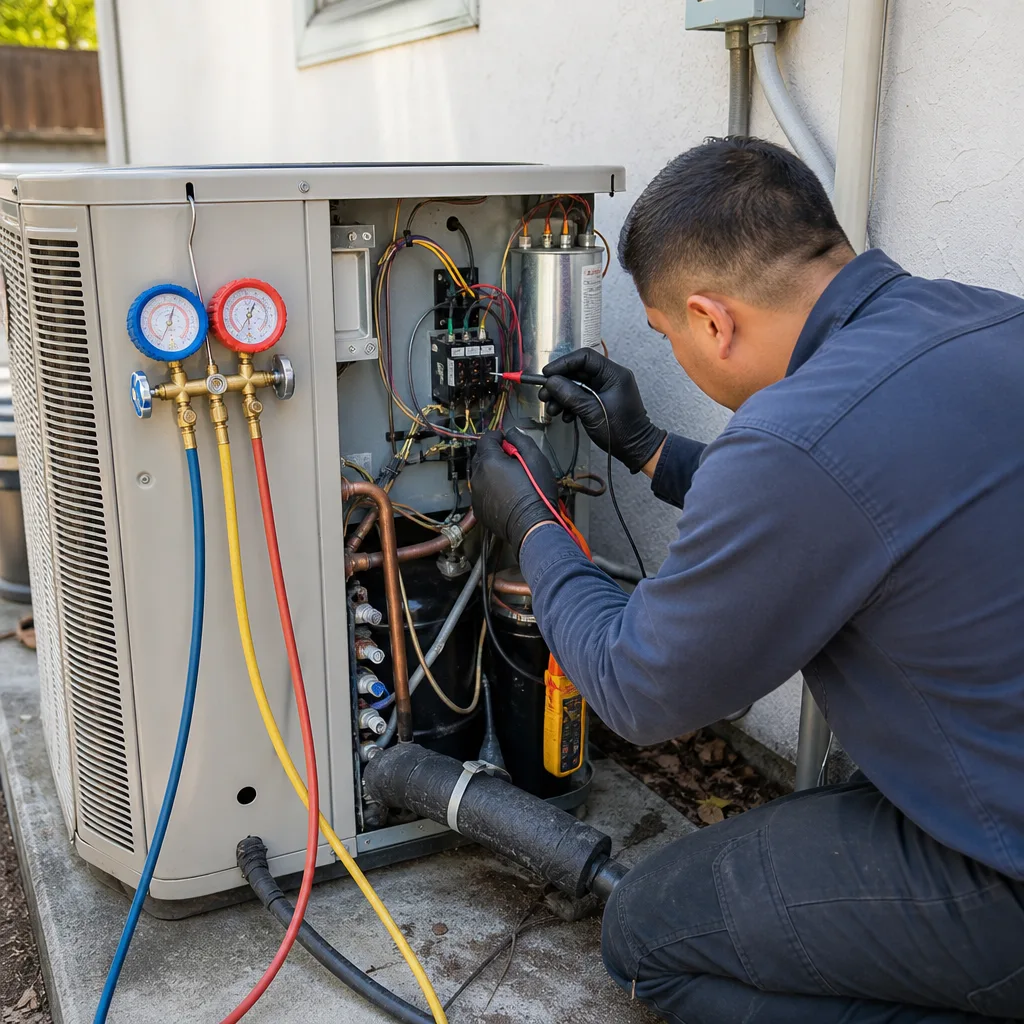
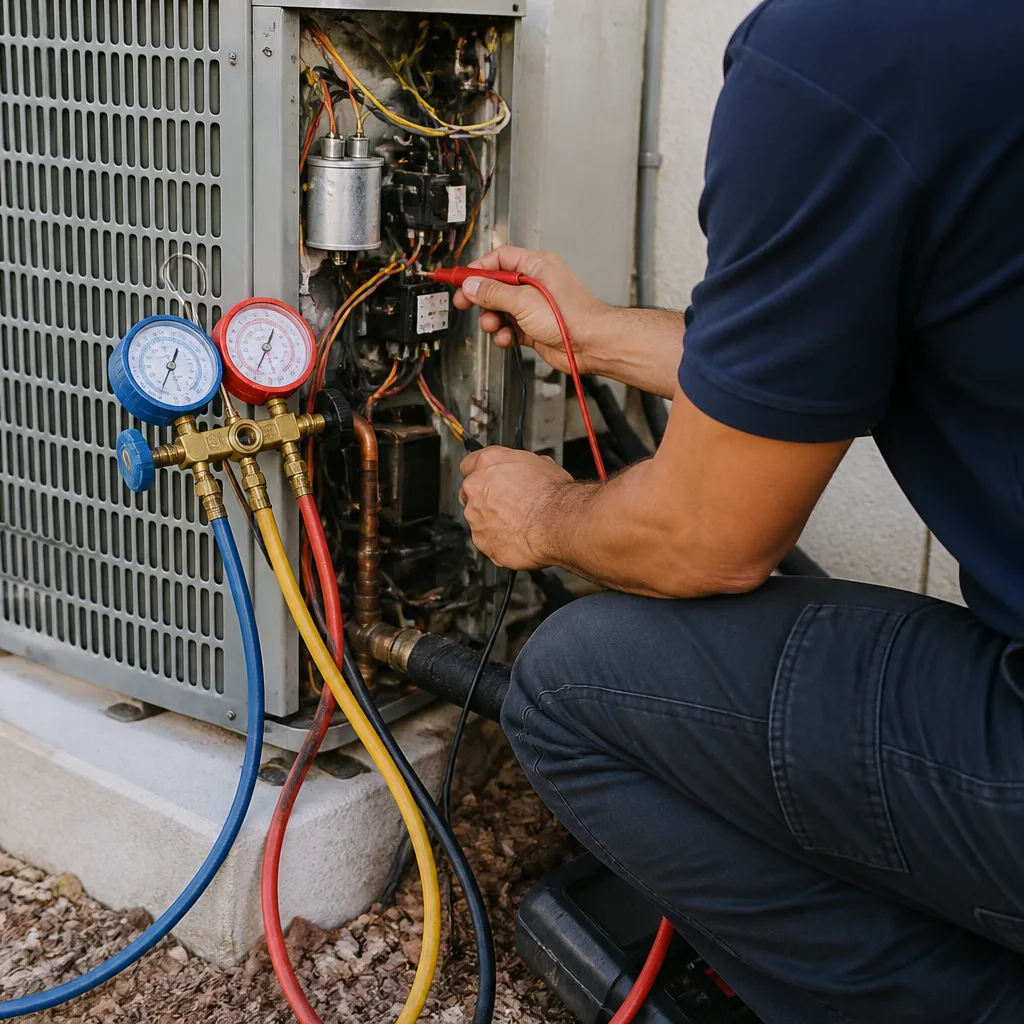
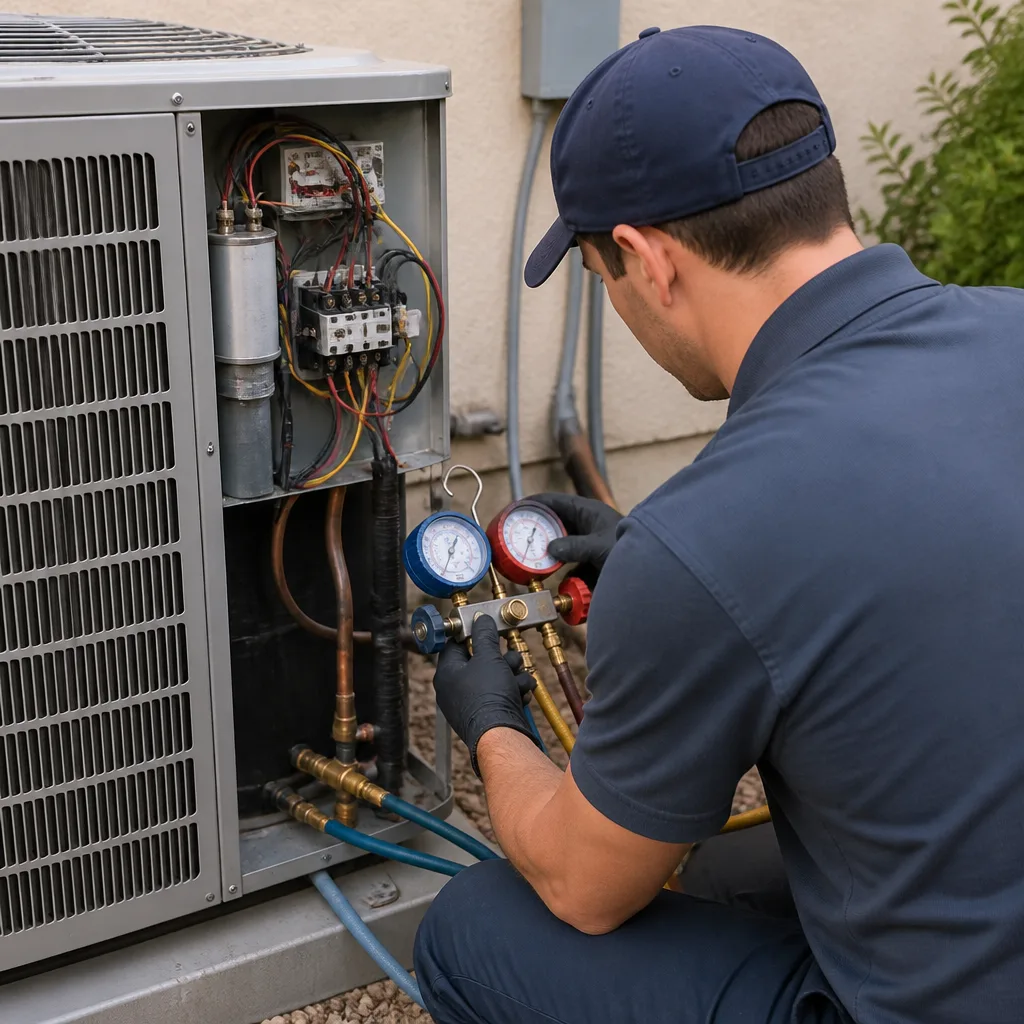
Refrigerant is not a consumable. If your system is low, it has a leak, and the leak needs to be found and repaired before adding refrigerant. A licensed technician checks pressures and superheat or subcooling (the measurements that indicate whether the refrigerant charge is correct, not just present). This is not a DIY task, and it’s illegal to handle refrigerant without an EPA Section 608 certification. During a pre-season tune-up, this check takes about 15 minutes and catches the problem while the fix is still a $400 repair instead of a $3,000 compressor failure.
Capacitor Voltage Test
Capacitors are the small cylindrical components that give your compressor and fan motors the initial voltage kick to start turning. They degrade with heat and age, and Sacramento’s summers are brutal on them. A capacitor that tests below 90% of its rated microfarad value is in early failure. It will work until the day it doesn’t, and the day it doesn’t is usually the hottest one, because heat accelerates the chemical breakdown inside the capacitor.
Replacing a weak capacitor costs between $180 and $320 in the Sacramento market, parts and labor included. Replacing a compressor that burned out because a failing capacitor forced it to start repeatedly under load costs $2,800 to $4,500. The voltage test takes a technician five minutes with a multimeter. It is the single highest-return maintenance item on this entire checklist.
Season Three: Peak-Load Summer (July-September)
Once Sacramento is in the sustained 95-108°F stretch, the maintenance priorities shift from preparation to monitoring. You’re not doing big work in July. You’re watching for the early signs that a system is about to lose the battle with the heat, and you’re managing the things that keep the system from working harder than it has to.
The Monitoring List
- Thermostat behavior: If the thermostat says 72°F but the house feels warm, or if the system cycles on and off more frequently than normal, something is degrading. In Sacramento’s dry heat, short cycling is often a dirty coil, a low charge, or an oversized system. All three need a professional diagnosis.
- Outdoor unit sounds: A hard start (a brief grinding or buzzing when the compressor kicks on), a rattling fan, or a hissing sound from the refrigerant lines are all early warning signs. Hissing specifically means refrigerant escaping, which means a leak.
- Condensate line flow: Sacramento’s summers are dry, but your system still pulls moisture from indoor air. If you see water pooling around the indoor unit or the line is dry for weeks, the drain line may be clogged. A clogged condensate line can trigger a float switch that shuts the whole system down.
Thermostat Strategy That Protects the System
Sacramento’s summer nights drop into the 60s, which means your AC gets a genuine cooling-off period overnight. That is the system’s recovery window. If you run a setback thermostat that lets the house climb to 78°F during the day and drops to 72°F at night, you’re giving the compressor a break during the hottest hours and reducing total daily run time. The goal is not to run the system less in July; it’s to run it in a pattern that matches how Sacramento’s diurnal temperature swing actually works.
Setting the thermostat to 68°F on a 108°F afternoon does not make the system cool faster. It makes it run longer. An AC system removes heat at a fixed rate. Dropping the setpoint lower than needed just extends the run cycle and raises energy cost. In our experience in Sacramento homes, 74-76°F during peak hours with ceiling fans running is the sweet spot for most families, and it keeps the system from running continuously through the hottest part of the day.
For a deeper look at how repairs fit into the peak-season picture, see our guide to AC repair in Sacramento.
Season Four: Tule Fog Shoulder (October-December)
Sacramento’s tule fog season, roughly November through February, brings a different kind of HVAC stress. The AC is done for the year. The furnace takes over. And the task most homeowners skip is the one that matters most for safety: verifying heat exchanger integrity before the first burn of the season.
A cracked heat exchanger in a gas furnace is a carbon monoxide risk, plain and simple. The heat exchanger is the metal chamber that keeps combustion gases separate from the air that blows through your ducts. When it cracks, exhaust gases, including carbon monoxide, can mix with conditioned air. During tule fog season, Sacramento homes are sealed up tight against the cold and damp, windows closed, doors closed, whole-house fan off. That is exactly the condition where a slow CO leak becomes dangerous, because there’s no natural dilution from outside air.
The pre-furnace inspection should include:
- Heat exchanger visual inspection: A technician looks for cracks, rust-through, and warping. This requires opening the furnace cabinet and, in many cases, using a borescope to see the full exchanger surface.
- CO test at registers: With the furnace running, a technician checks carbon monoxide levels at supply registers. Any measurable CO above ambient is a red flag.
- Burner flame color check: A steady blue flame indicates proper combustion. Yellow or flickering flame means incomplete combustion, which produces more CO and soot.
- Flue and venting check: Tule fog brings long periods of high humidity. Moisture accelerates rust in venting, especially in older Sacramento homes with single-wall flue pipe.
This is the one fall task that does not get deferred. If the heat exchanger is cracked, the fix is either replacing the exchanger or replacing the furnace, and finding that out in November when the furnace is already running every night is far better than finding it out in February when the system has been silently leaking CO for months. For homes with aging furnaces, the furnace repair in Sacramento page covers what to expect from a diagnosis.
What You Can Safely Do Yourself
There’s a line between homeowner maintenance and technician work, and the line exists for a reason. For more guides & resources on maintaining your system, visit our blog. On your side of the line: tasks that involve observation, cleaning accessible surfaces, and replacing consumable parts. On the technician side: anything involving refrigerant, gas, high-voltage electrical, or sealed system components. Here’s the Sacramento-specific version of the homeowner list.
Monthly or Every 60-90 Days Depending on Season
- Swap the air filter. During wildfire smoke events, check every two weeks. Normal months, every 60-90 days. Write the install date on the filter frame with a Sharpie so you never guess.
- Visually inspect the outdoor condenser. Look for bent fins, debris buildup on the coil face, and anything leaning against the unit. Sacramento’s wind blows leaves, seed pods, and construction debris into condenser fins more than you’d expect.
- Clear the condensate drain line. Pour a cup of white vinegar down the drain access point every 60 days during cooling season. This prevents the algae and sludge buildup that clogs the line.
Every Spring (Before First Heat Wave)
- Clear a 2-foot zone around the outdoor unit. Cut back weeds, remove stored items, and make sure nothing blocks airflow. The condenser needs unrestricted air on all four sides.
- Rinse the outdoor coil with a garden hose. Turn off power at the disconnect box first. Spray from the top down at a 45-degree angle. Do not use a pressure washer, which bends the aluminum fins and permanently reduces heat transfer.
- Replace thermostat batteries. If your thermostat runs on AA or AAA batteries, swap them in April. A dead thermostat battery in July means a dead AC, and that’s a service call that costs $150 for a $6 fix.
Every Fall (Before Furnace Season)
- Replace the filter with a standard MERV 8 unless smoke season is still active. MERV 11 and 13 restrict airflow, and your furnace needs clean airflow for proper combustion.
- Test the CO detectors. This is not strictly HVAC, but it’s the companion task to furnace season. CO detectors have a 5-7 year lifespan. If yours are older, replace them in October.
- Walk around the house and check each supply register. Make sure no furniture, rugs, or toys are blocking airflow. Closed registers in unused rooms actually increase static pressure in the rest of the system, not decrease it as many homeowners assume.
What Requires a Licensed Technician (and Why)
The line between DIY and professional work is not arbitrary. It’s drawn where a mistake creates a safety hazard, a code violation, or damage that costs more than the service call would have. Here’s where that line sits for Sacramento homeowners.
Refrigerant Handling
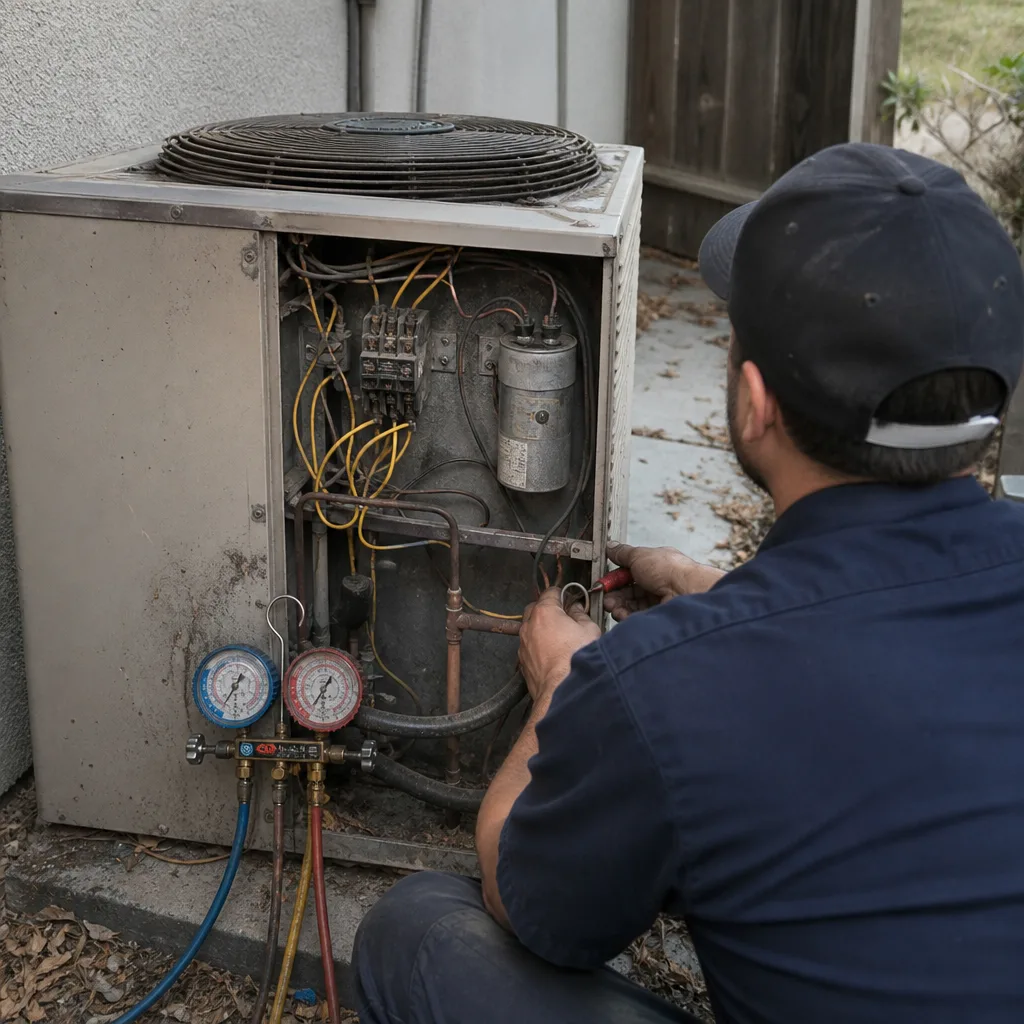
Refrigerant is regulated by the EPA. Handling it requires a Section 608 certification. Recharging a system that’s low without finding and fixing the leak is illegal and ineffective. A professional uses manifold gauges and a scale to measure the charge precisely. Getting this wrong either undercharges the system (poor cooling, iced coil) or overcharges it (high head pressure, compressor stress, possible failure).
Capacitor Replacement
Capacitors store electrical charge even after the unit is disconnected. A charged capacitor can deliver a painful or dangerous shock. A technician discharges the capacitor safely with a resistor, tests it with a multimeter, and sizes the replacement correctly. Wiring it backwards is a $300 mistake that can fry the compressor.
Heat Exchanger Inspection and Repair
As covered in the fall section, a cracked heat exchanger is a carbon monoxide risk. Inspection requires opening the furnace cabinet and, in many cases, using a borescope. Repairing or replacing a heat exchanger involves gas line disconnection, which must be leak-tested after reassembly. This is not a Saturday afternoon project.
Electrical Panel and Contactor Work
The contactor is the switch that routes 240-volt power to the compressor and fan motor. When a contactor fails, it arcs and pits, and the symptoms look like a dead system. Replacing one involves working inside the electrical panel of the outdoor unit with live 240-volt power present. In Sacramento, a contactor replacement typically runs $180 to $350, and it’s a job you do not attempt without training and the right insulated tools.
Meadowsweet Heating and Air Sacramento services equipment from Carrier, Trane, Lennox, Goodman, Rheem, York, Daikin, Bryant, and American Standard. When one of our background-checked, uniformed technicians arrives at your Sacramento home, they follow the C.A.R.E. values code: Clean up like it’s their own home, Ask before moving anything, Respect the family’s time and quiet hours, and Explain the price before the work begins. Shoe covers go on at the door. A drop cloth goes under the indoor unit. A written price is provided before any work starts, every time, no exceptions.
How to Document Maintenance for Warranties and Disclosures
Most Sacramento homeowners don’t think about documentation until a warranty claim gets denied or a home sale gets held up. Both happen more often than you’d expect. Here’s the documentation system that keeps both scenarios straightforward.
The key fact: most equipment warranties, including those from Carrier, Trane, and Lennox, require proof of annual professional maintenance. The compressor on a Trane XV18 has a 12-year warranty, but Trane will ask for maintenance records if you file a claim. No records, no compressor coverage. In Sacramento’s heat-driven failure environment, that’s a $2,500 to $4,000 difference.
What to keep:
- A written service report from every professional visit. The report should include date, technician name, work performed, measurements taken (capacitor microfarad reading, refrigerant pressures, temperature drop across the coil), and any recommendations. If your HVAC company doesn’t provide this, ask for it.
- A simple spreadsheet or notebook for DIY tasks. Date, task, and filter MERV rating installed. Three columns. Takes 30 seconds each time.
- Photos of the outdoor unit after each seasonal cleaning. If a tree branch falls on the condenser and insurance gets involved, you’ll have a “before” photo that shows the unit was in good condition.
- Receipts for any parts you buy. Filters, thermostat batteries, CO detectors. Keep them in the same folder as the service reports.
For home sales in the Sacramento market: California SB 1398 requires sellers to disclose known HVAC issues. Having a clean maintenance record makes that disclosure a simple, honest “system maintained annually” statement instead of a “buyer should inspect further” red flag. Buyers in the Sacramento market have become savvy about old HVAC equipment, and a documented maintenance history is genuinely worth money at closing.
Common Mistakes to Avoid
- Running the AC with no filter during peak pollen or smoke season. We see this when a filter gets dirty and a homeowner pulls it out “temporarily” while waiting for a replacement. The unfiltered air coats the evaporator coil with whatever the filter would have caught, and now you need a coil cleaning, not a filter swap.
- Using a pressure washer on the condenser coil. The fins are thin aluminum. A pressure washer folds them flat in seconds. Once the fins are matted down, airflow drops permanently until a technician combs them out at a cost of $150 to $400.
- Closing vents in unused rooms to “save energy.” Modern systems are sized for a specific total airflow. Closing registers raises static pressure across the system, which makes the blower work harder and can shorten its life. If you don’t use a room, close the door, not the vent.
- Ignoring a puddle under the indoor unit because “it’s just condensation.” During Sacramento’s dry summers, a puddle means the condensate drain is clogged and water is backing up into the drain pan, or worse, onto the floor. Left alone, it rots the cabinet and can trigger a float switch shutdown.
- Waiting for the first hot day to discover a problem. By the time Sacramento hits its first 100°F stretch, every HVAC company in the region is booked out 3-7 days for non-emergency work. The pre-season tune-up in April or May is the difference between a scheduled appointment and an emergency call.
- Skipping the heat exchanger check because “the furnace seems fine.” Carbon monoxide has no smell, no taste, and no visible warning. The only way to know the heat exchanger is sound is to inspect it. In Sacramento homes with attached garages and gas appliances, this check is not optional.
- Installing a MERV 16 filter in a system designed for MERV 11. High-MERV filters are not universally better. If your blower can’t handle the pressure drop, you’ll freeze the coil in summer and starve the furnace of airflow in winter. Match the filter to the system, not to the marketing on the filter package.
When to Call a Professional
Call a professional when you see ice on the refrigerant lines or the indoor coil, when the system runs but doesn’t cool, when you hear sounds that weren’t there before (grinding, hissing, hard-start buzzing), when the breakers trip repeatedly, or when the thermostat says everything is fine but the house is 10 degrees warmer than the setpoint. Call before the problem becomes an emergency, not after. During peak Sacramento summer weeks, non-emergency appointments fill fast, but emergency appointments are always available. Meadowsweet Heating and Air Sacramento offers free estimates in Sacramento. Call (279) 263-8708 any time, day or night, and a live person answers. No voicemail queue, no automated directory, no “leave a message and we’ll call you back in 2-3 business days.”
If your system is approaching replacement age or you’re weighing repair against replacement, see AC installation in Sacramento for what a new system costs, what rebates are available, and what to expect from the process.
Frequently Asked Questions
Every 60-90 days during normal months, and every 14 days during active wildfire smoke events. The smoke season in Sacramento typically runs July through October, but it varies year to year. If you can see visible gray on a white filter, it’s time to change it regardless of the calendar.
In the Sacramento market, a professional AC tune-up or maintenance visit typically runs $89 to $189 depending on the company and the depth of the inspection. This includes coil cleaning, capacitor testing, refrigerant pressure check, and the written report you’ll want for warranty documentation. Call (279) 263-8708 for a free estimate on seasonal maintenance.
You can rinse the exterior of the coil with a garden hose after cutting power at the disconnect box. That removes surface dirt. But a proper coil cleaning, the kind that removes the interior-facing buildup that actually chokes airflow, requires removing the panels and cleaning from the inside. That’s a technician-level task, and it’s included in a professional tune-up.
MERV 8 for normal months, MERV 11 or 13 during wildfire smoke season. MERV 13 captures roughly 85% of the PM2.5 in wildfire smoke, which is the particle size that causes respiratory problems. But MERV 13 restricts airflow more than MERV 8, so it only works if your system is designed to handle the additional static pressure. A pre-summer inspection confirms whether your system can handle MERV 13 safely.
The short answer: replace when the repair costs more than roughly 30% of a new system, or when the system is over 12-15 years old and showing signs of refrigerant leaks or compressor wear. Sacramento’s cooling load is severe, and an older system that’s marginally holding on in June may not survive August. For a full breakdown of the repair-versus-replace math, see our guide to AC repair in Sacramento.
Yes. A live person answers every call, 24 hours a day, 7 days a week, including nights, weekends, and holidays. No voicemail queue, no automated attendant. When your AC dies on a Saturday night in July, you’ll talk to a human being who can dispatch a technician. That’s part of the Cedarwell Care Promise, and it’s non-negotiable for us.
The Bottom Line
Sacramento’s climate punishes neglected AC equipment faster than almost anywhere else in California. The sequence that matters: clean the condenser coil and test the capacitor before the first heat wave, upgrade to MERV 11 or 13 during wildfire smoke season and check filters every two weeks, monitor the system during peak-load summer for the early warning signs of failure, and verify the heat exchanger before tule fog season makes a cracked exchanger dangerous. Document everything. The five tasks on this checklist are not busywork. They are the difference between a system that runs for 18 years and one that fails catastrophically on the hottest afternoon of the year. If you want help with any of this, Meadowsweet Heating and Air Sacramento is one call away at (279) 263-8708. We serve the Sacramento area with the Meadowsweet Heating and Air Sacramento home team, and every visit includes a written price before any work starts, shoe covers and drop cloths inside your home, and a photo of the clean-up before we leave.
Written by Luis Serrano, Owner at Meadowsweet Heating and Air Sacramento, serving Sacramento since 2004.
See the difference
 Before
 After
After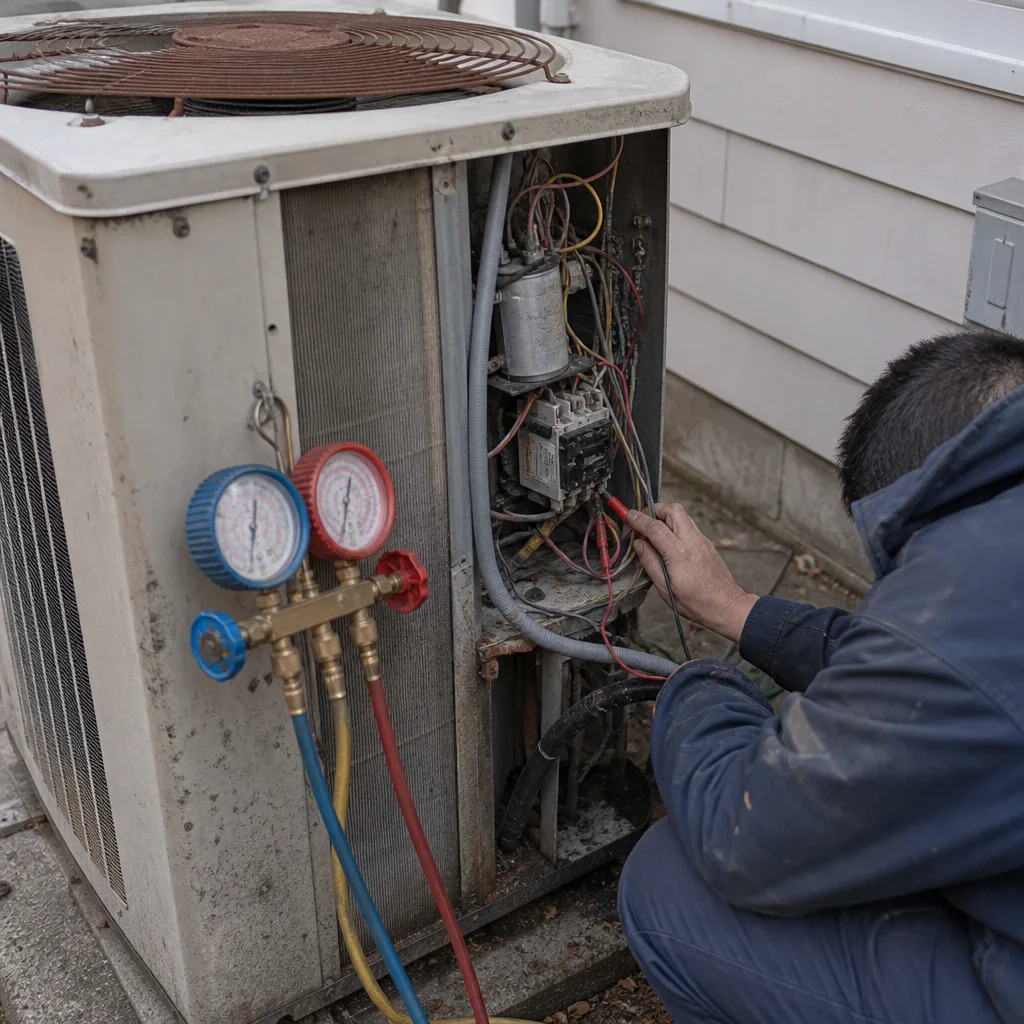 Before
 After
After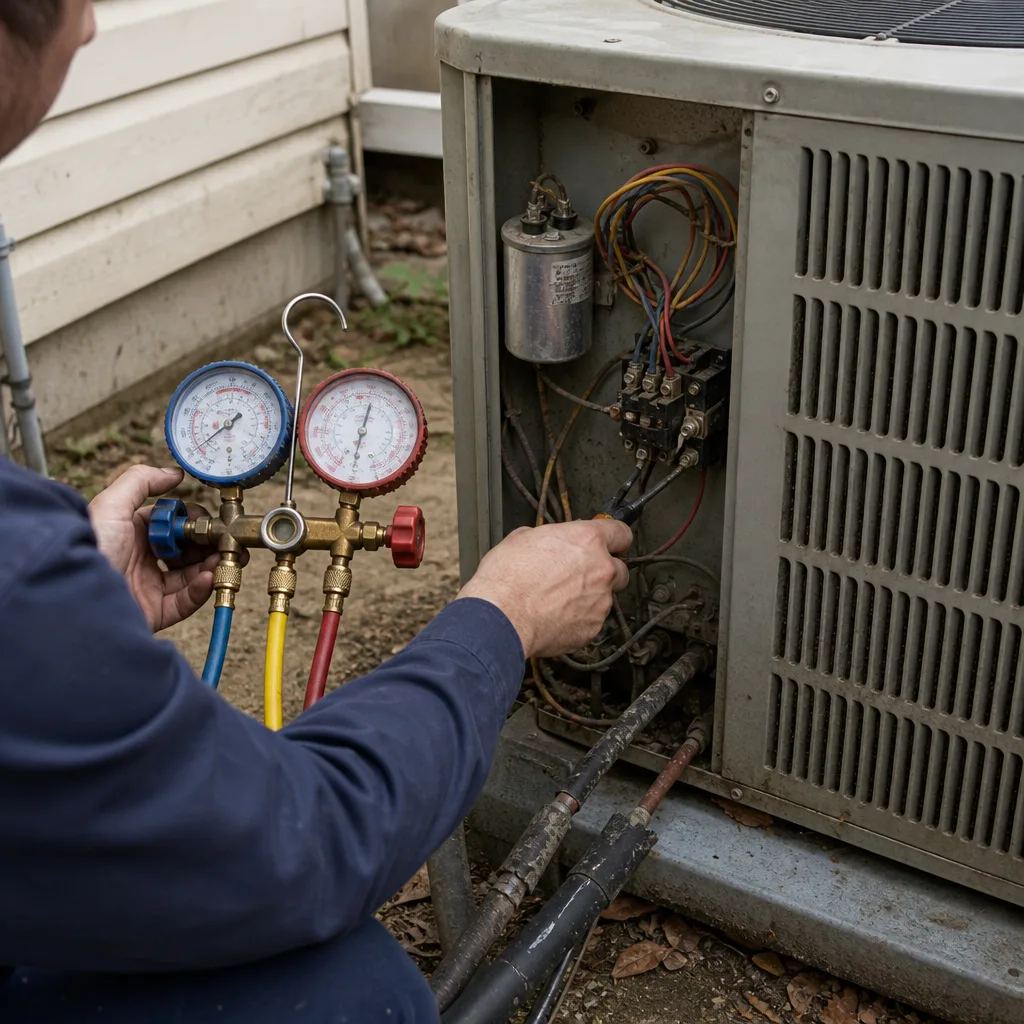 Before
 After
After